
Printable Number Charts
A number chart arranges consecutive numbers in equal rows and columns, making counting patterns and place value easier to see. Moving across a hundred chart changes the number by one, while moving down a row changes it by ten.
Use these charts for counting, skip-counting, addition and subtraction, number recognition, and missing-number practice. Choose 1–100 for the familiar hundred chart, 0–99 for zero-based work, or 1–120 when lessons continue beyond one hundred.
Online Tools
Build custom 3×3 grids or create missing-number worksheets with answer keys.
Ready-made Resources
Each resource includes A4, US Letter, and PNG downloads with preview and teaching notes.
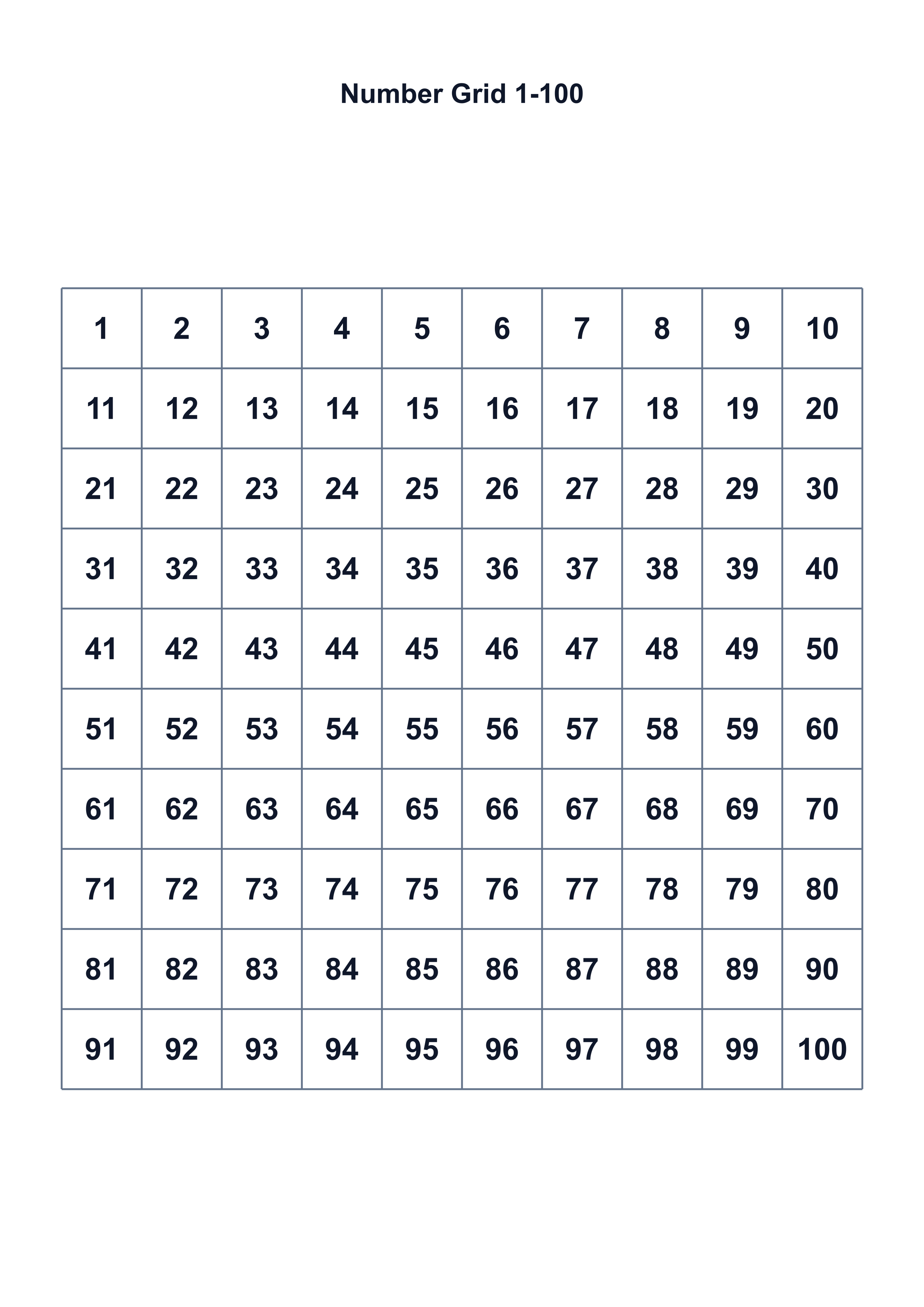
1–100 Number Grid
A complete 10 × 10 hundred chart for counting, skip counting, place value, and number patterns.
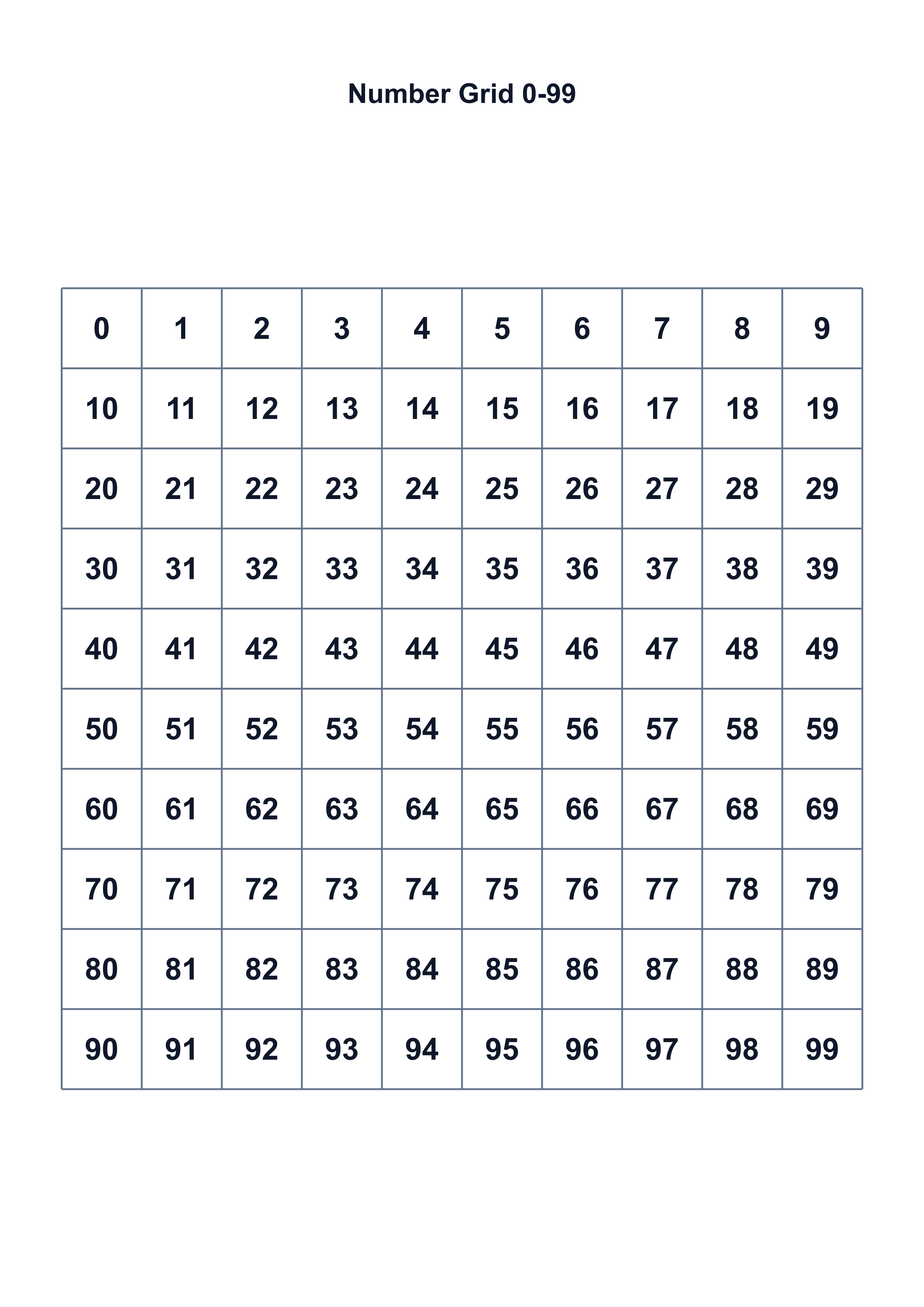
0–99 Number Grid
A zero-based 10 × 10 chart that keeps each decade aligned in the same row for place-value work.
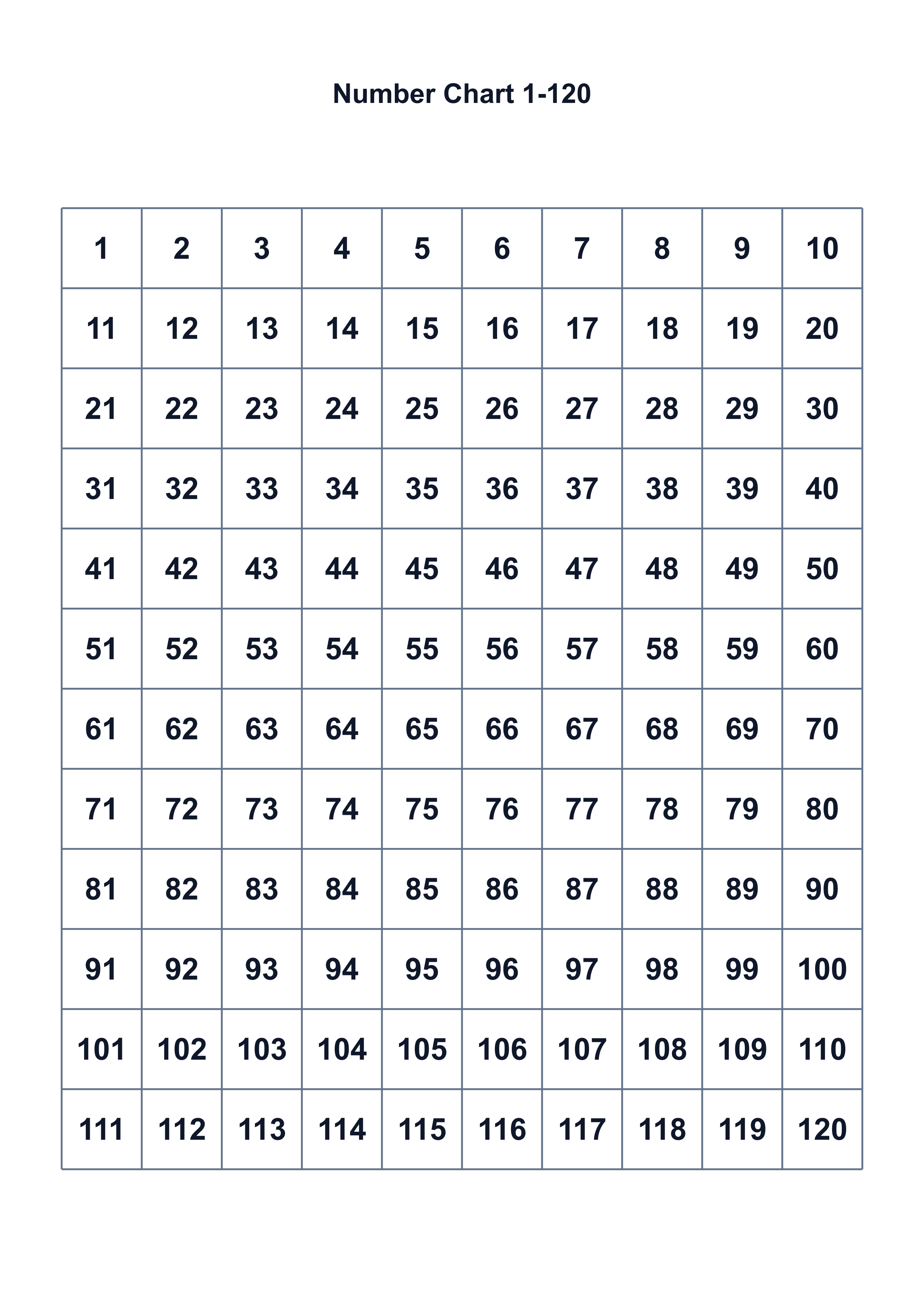
1–120 Number Chart
Twelve rows of ten numbers for early-grade counting, addition strategies, and classroom reference.
Blank Hundred Chart
A clean 10 × 10 grid for students to build a hundred chart from memory or follow teacher prompts.
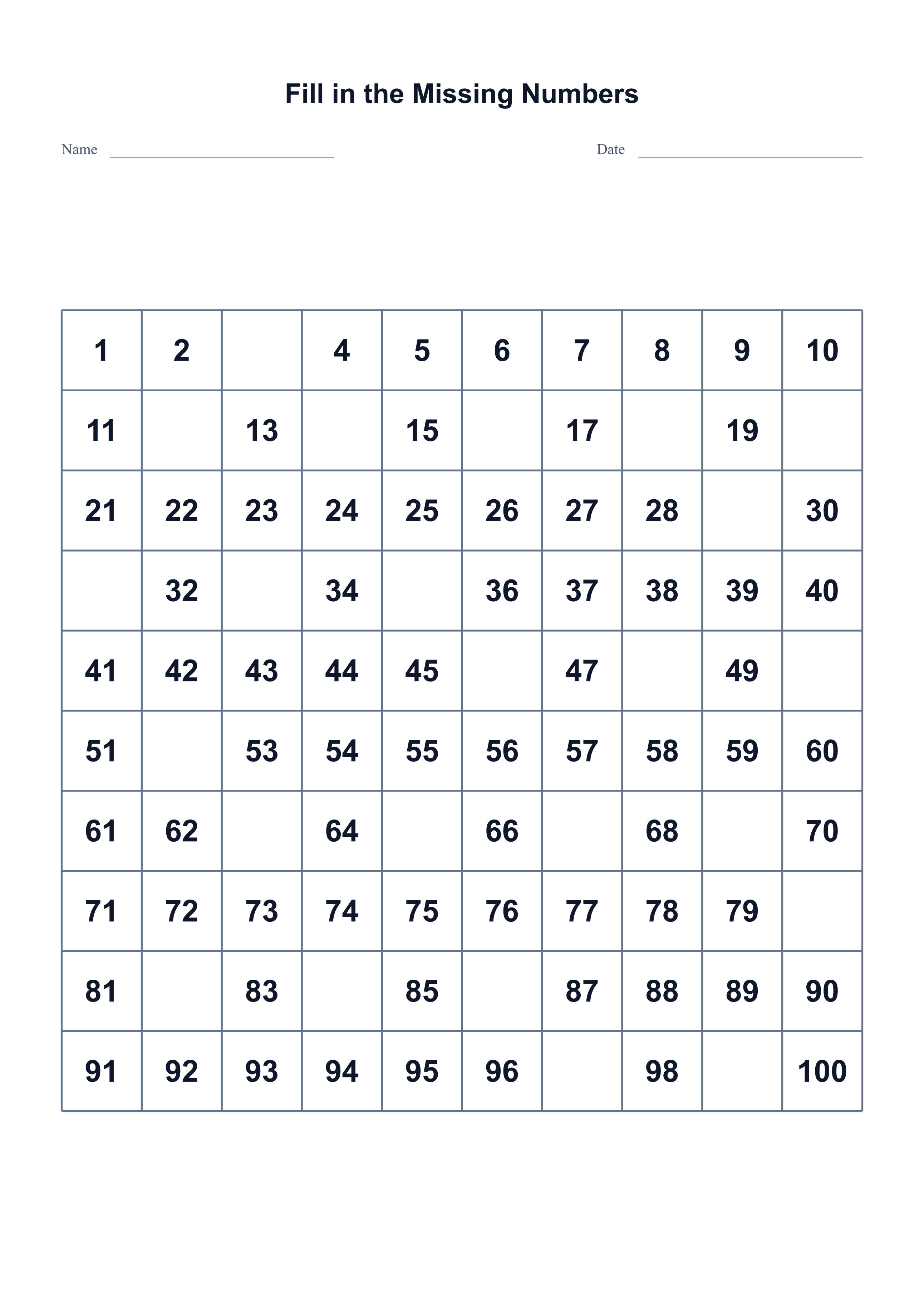
Missing Numbers 1–100
A deterministic missing-number worksheet with enough clues for pattern recognition and independent practice.
Choosing a Grid
| Grid | Best use |
|---|---|
| 1–100 | Counting to 100, skip counting, patterns, and classroom reference. |
| 0–99 | Place value, decades, and rows beginning with multiples of ten. |
| 1–120 | Counting beyond 100 and early addition or subtraction strategies. |
Ways to Use
-
Find patterns
Highlight multiples and explain the visual pattern.
-
Count forward and back
Move horizontally by ones or vertically by tens.
-
Fill missing values
Adjust support levels for practice or assessment.
-
Build the chart
Reconstruct the number sequence from memory.
Common Questions
Quick answers about number grids
What is the difference between a 1-100 grid and a 0-99 grid?
A 1-100 grid starts with 1 and ends with 100. A 0-99 grid starts each decade with a multiple of ten, which can make place-value and decade patterns easier to see.
Why do some classrooms use a 1-120 number chart?
A 1-120 chart extends two rows beyond 100, giving early learners more room to practice counting on, adding tens, and recognizing patterns above 100.
Can I make a blank or missing-number chart?
Yes. Open the maker and choose Complete grid, Missing numbers, or Blank cells. Missing-number worksheets keep the first and last values visible and remove a repeatable set of cells for practice.
Can I change the range and number of columns?
Yes. Set the start, end, step, and column count in the Number Grid Generator. The preview automatically calculates the rows and fits the grid to A4, Letter, or A3 paper.