
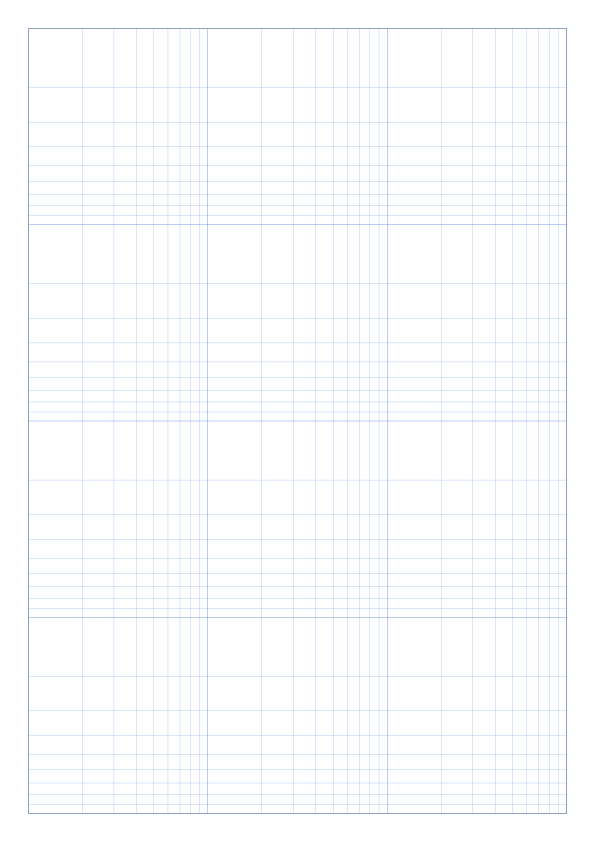
3 x 4 cycles A4
Printable Log-Log Graph Paper PDF
Printable A4 log-log graph paper in portrait format with 3 x 4 cycles for three orders of magnitude on X and four on Y. Built for standard classroom worksheets, reports, and lab printing.
Using this generator
Log-log paper uses logarithmic scaling on both axes. It is designed for power-law relationships, engineering plots, physics labs, and scientific data where both variables cover a wide numeric range.
01
Match the paper size to the printer or digital document, then choose portrait or landscape. Use margins to reserve space for binding, trimming, or notes.
02
03
04
Choose PDF for physical printing and PNG for slides, worksheets, or digital notes.
Common questions
Answers about choosing settings, using the preview, and exporting this paper type.
Log-log paper uses logarithmic scaling on both axes. Semi-log paper uses a logarithmic scale on only one axis and a linear scale on the other.
Set each axis independently to cover its data range. More cycles allow more orders of magnitude but make each subdivision physically smaller.
PDF keeps dense logarithmic subdivisions sharp and preserves scale better than a resized image when the page is printed.
Prefer a ready-made file? Browse printable base-10 log-log graph paper with direct PDF, PNG, and SVG downloads in multiple sizes and cycle layouts.
Printable A4 log-log graph paper in portrait format with 3 x 4 cycles for three orders of magnitude on X and four on Y. Built for standard classroom worksheets, reports, and lab printing.
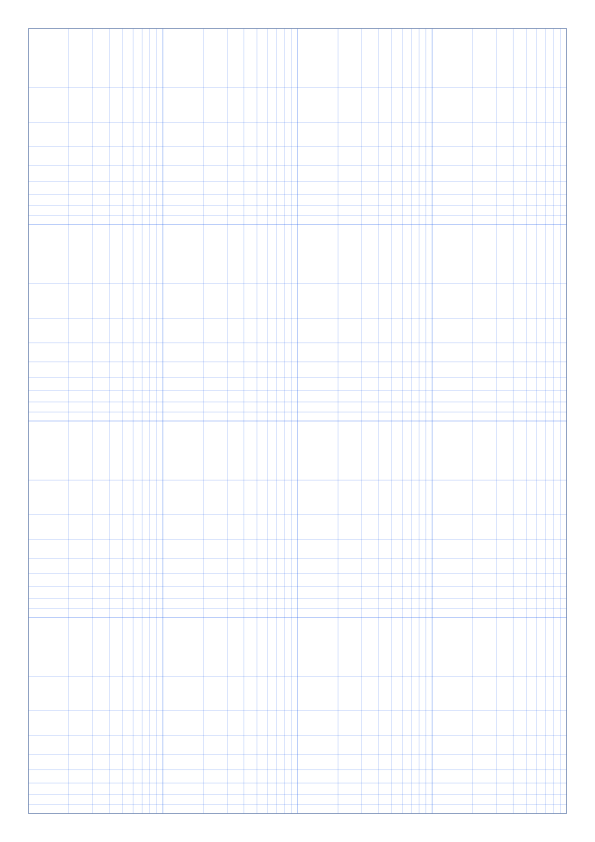
Printable A4 log-log graph paper in portrait format with 4 x 4 cycles for four orders of magnitude on each axis. Built for standard classroom worksheets, reports, and lab printing.
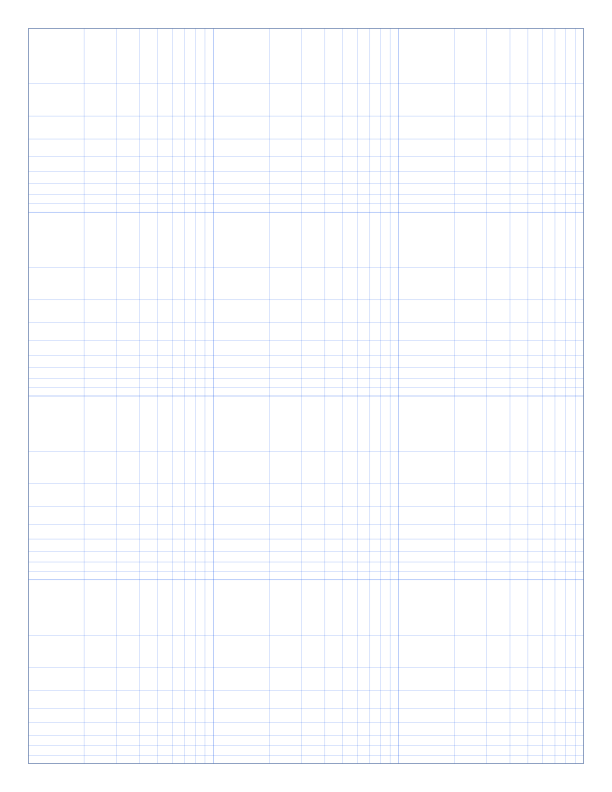
Printable Letter log-log graph paper in portrait format with 3 x 4 cycles for three orders of magnitude on X and four on Y. Built for US home, school, and office printing.